DAYTIME
Close the sunny side
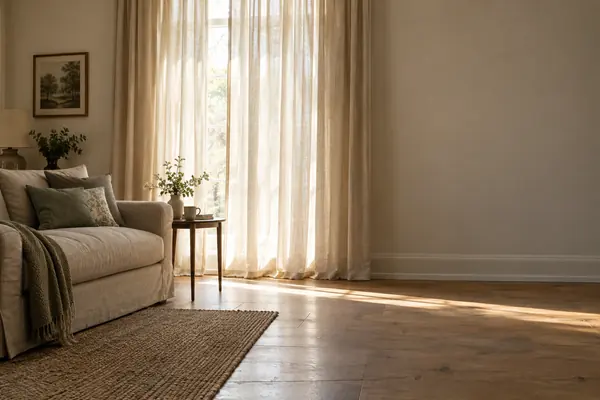
UKHSA advises closing blinds and curtains on windows in direct sunlight, and external shutters or shades if you have them.
Four habitsWHAT THE GUIDANCE SAYS
Homes can overheat fast in a hot spell.
UKHSA and NHS guidance comes back to a daily rhythm: keep sunlight out during the day, let cooler air in once the evening drops, and keep an eye on anyone at higher risk.
CLOSE UP by day, open at night
THE SHORT ANSWER
A hot home is often about timing.
Guidance focuses on when to close up and when to open.
DAYTIME
UKHSA advises closing blinds and curtains on windows in direct sunlight, and external shutters or shades if you have them.
Four habitsNIGHT
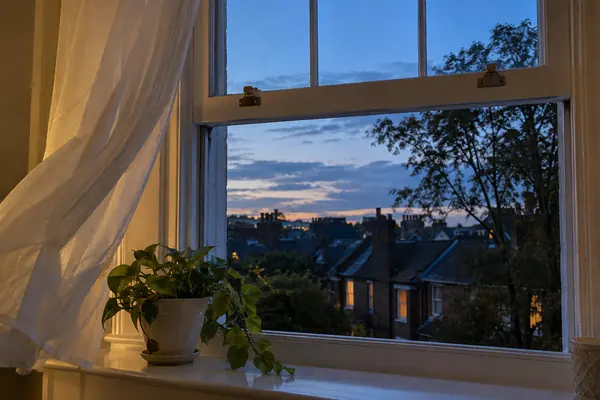
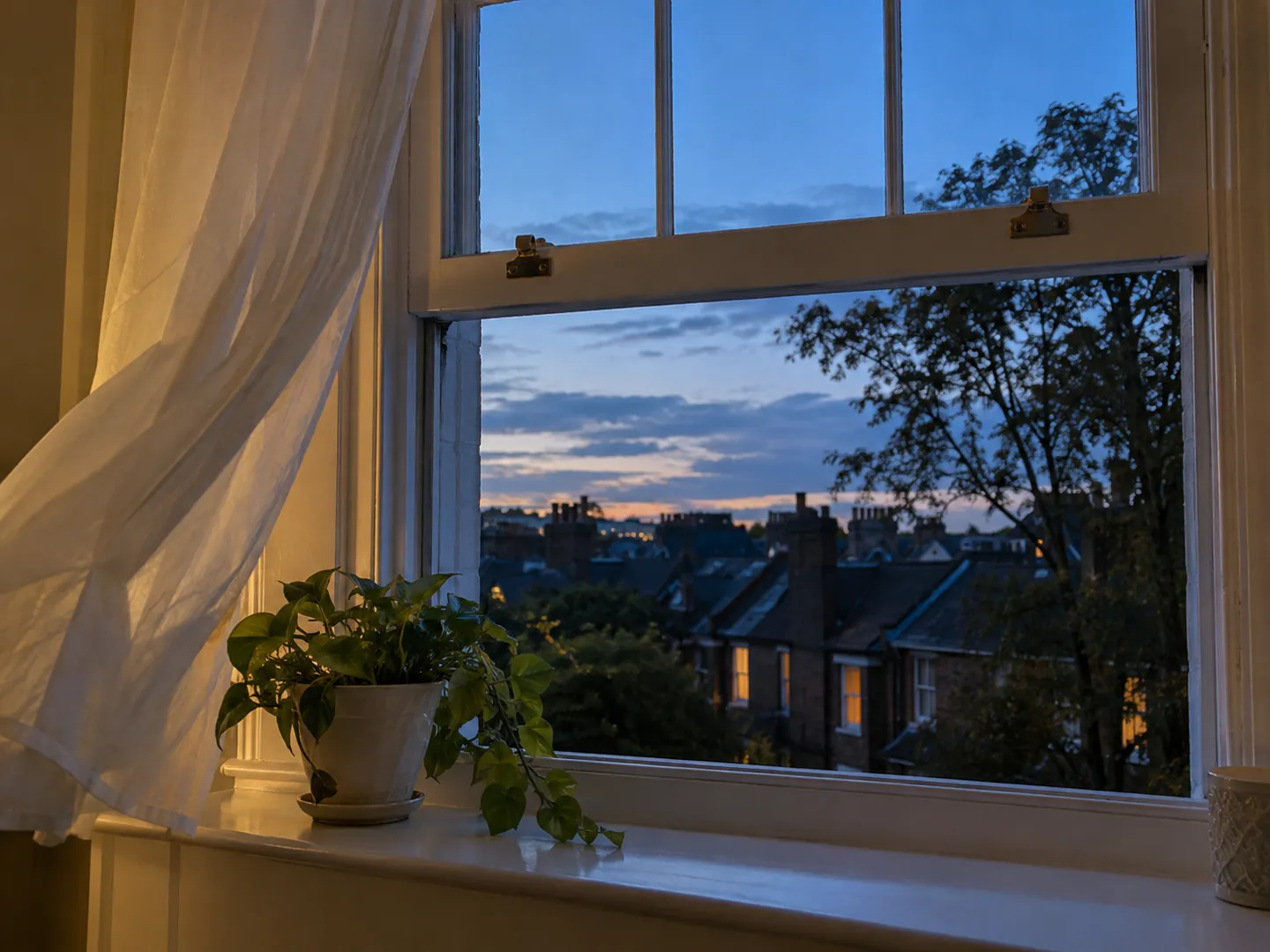
Open windows, if it is safe, when the air outside feels cooler than inside, often at night, and try to get air flowing through.
Why timing mattersFANS
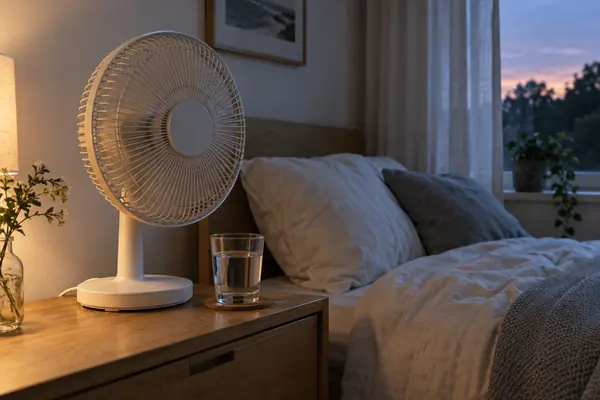
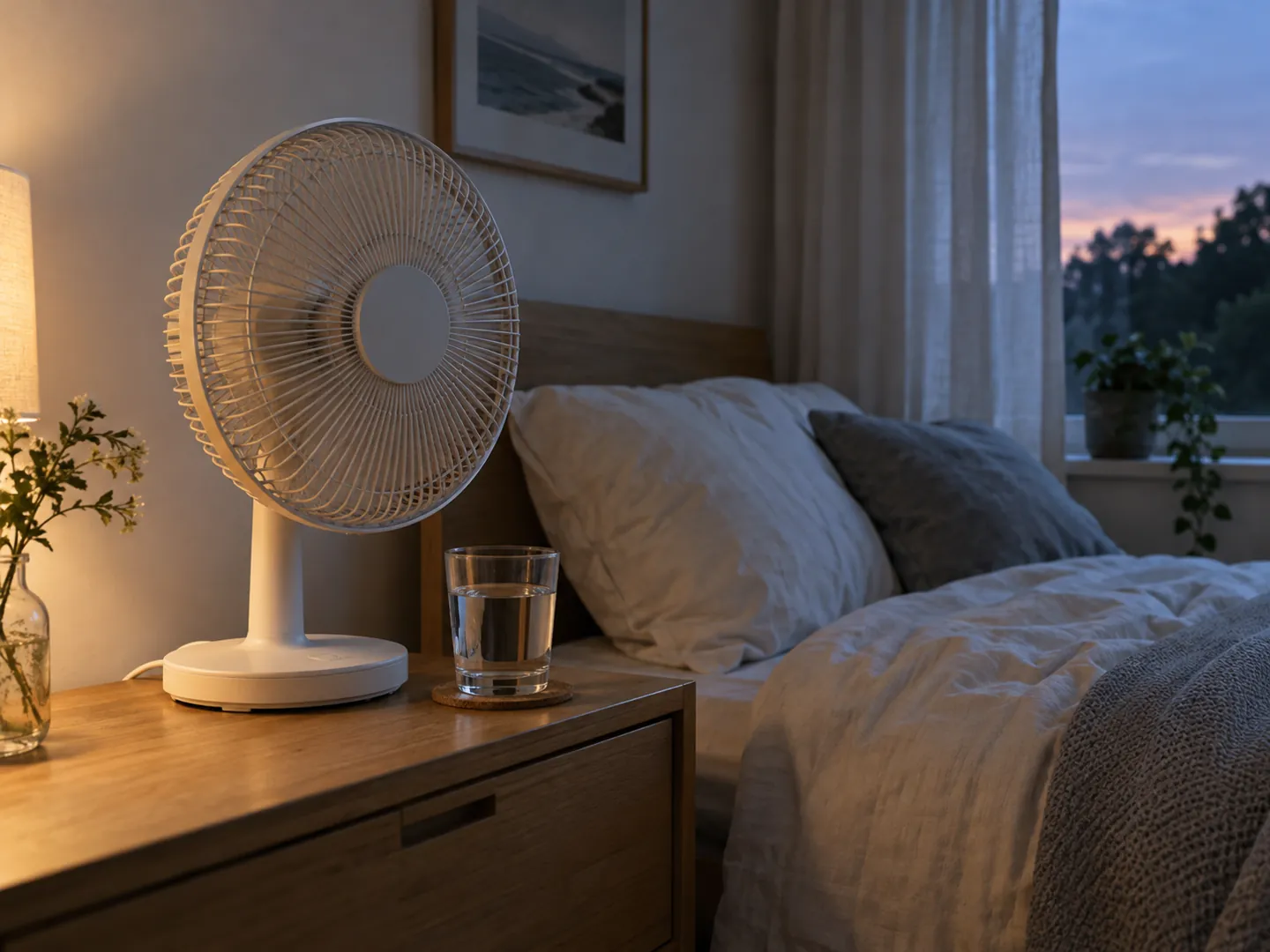
Electric fans can help if the air is below 35°C. UKHSA says not to aim one straight at your body, as this can lead to dehydration.
Read an alertA QUICK ALERT CHECK
In England, UKHSA and the Met Office issue heat-health alerts in colours. Pick one to see what it means. The bar shows how serious the expected impact is.
Based on UKHSA's Heat-Health Alerting system guidance (England). General information, not medical advice.
TWO NUMBERS WORTH KNOWING
One record temperature,
one measure of what heat can cost.
40.3°C
Highest UK temperature, 19 July 2022
Recorded at Coningsby in Lincolnshire. The Met Office says the old record of 38.7°C was met or beaten at 46 stations during that heatwave.
UK RECORD · MET OFFICE
2,803
Heat deaths among over-65s, England 2022
UKHSA estimates 2,803 people aged 65 and over died due to the heat in England in 2022, and says heat-related deaths per year may triple by 2050.
HEAT DEATHS · UKHSA
The Met Office defines a UK heatwave as at least three days in a row with maximum temperatures at or above a threshold that varies by county.
FOUR HABITS FOR HOT DAYS
These come from UKHSA's Beat the heat guidance and the NHS. Most cost nothing and use what is already in the house.
Move to a cooler part of the house, especially for sleeping.
Check the heating is off and turn off lights and electrical equipment not in use.
The NHS suggests checking rooms where people at higher risk live and sleep.
Libraries, supermarkets and other public buildings nearby may be cooler than home.
WHO TO CHECK ON
UKHSA lists people aged 65 and over, babies and children aged 5 and under, pregnant women and people with conditions such as heart or breathing problems, dementia or diabetes among those at higher risk. It lowered the age group from 75 to 65.
Guidance asks everyone to check on family, friends and neighbours at higher risk. If a rented home is dangerously hot, the NHS says the local council's environmental health office can inspect it for hazards, including excess heat.
Questions
UKHSA advises opening windows, if it is safe, when the air feels cooler outside than inside, such as at night. During the day, close curtains and blinds on sunny windows.
UKHSA and the NHS say fans can help if the temperature is below 35°C. UKHSA advises not aiming the fan directly at your body, as this can lead to dehydration.
The Met Office says a heatwave is at least three consecutive days with maximum temperatures at or above a threshold that varies by county, based on 1991 to 2020 climate data.
An England-only alert from UKHSA and the Met Office, coloured yellow, amber or red by the likely impact on health and how likely it is. The alerts are freely available to the public, and you can register to get them by email.
UKHSA suggests drinking regularly through the day, enough that your pee is a pale straw colour. Water, diluted squash and lower fat milks are good choices, and alcohol dehydrates.
Sources
ABOUT THIS NAME
doodlecool.com is part of the DoodleSale portfolio. It isn't in an auction right now, but you can ask about leasing it.